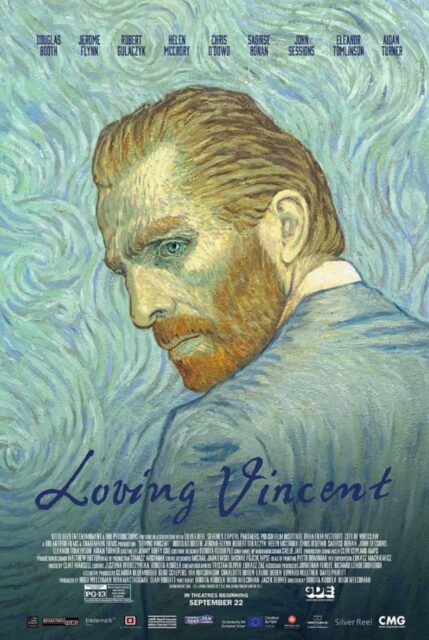
Bir ressamın tablolarına bakarken bazen kendimi o görüntünün içine girmiş gibi hissettiğim olur. Renklerin birbirine karışması, fırça darbelerinin yönü ve ışığın yüzey üzerindeki etkisi, resmin anlattığı hikâyeyi kelimelerden bağımsız biçimde aktarabilmektedir. 2017 yılında izleyiciyle buluşan Loving Vincent ise bu hissi sinema perdesine taşıyan oldukça sıra dışı bir yapımdır. Dorota Kobiela ve Hugh Welchman tarafından yönetilen film, sinema tarihinde her karesi elle yağlı boya ile hazırlanmış ilk uzun metrajlı animasyon filmi olarak öne çıkmaktadır. Yaklaşık 94 dakika süren yapım, Vincent van Gogh’un yaşamının son dönemini ve ölümünün ardındaki soru işaretlerini, sanatçının kendi tablolarından yola çıkarak anlatmaktadır.
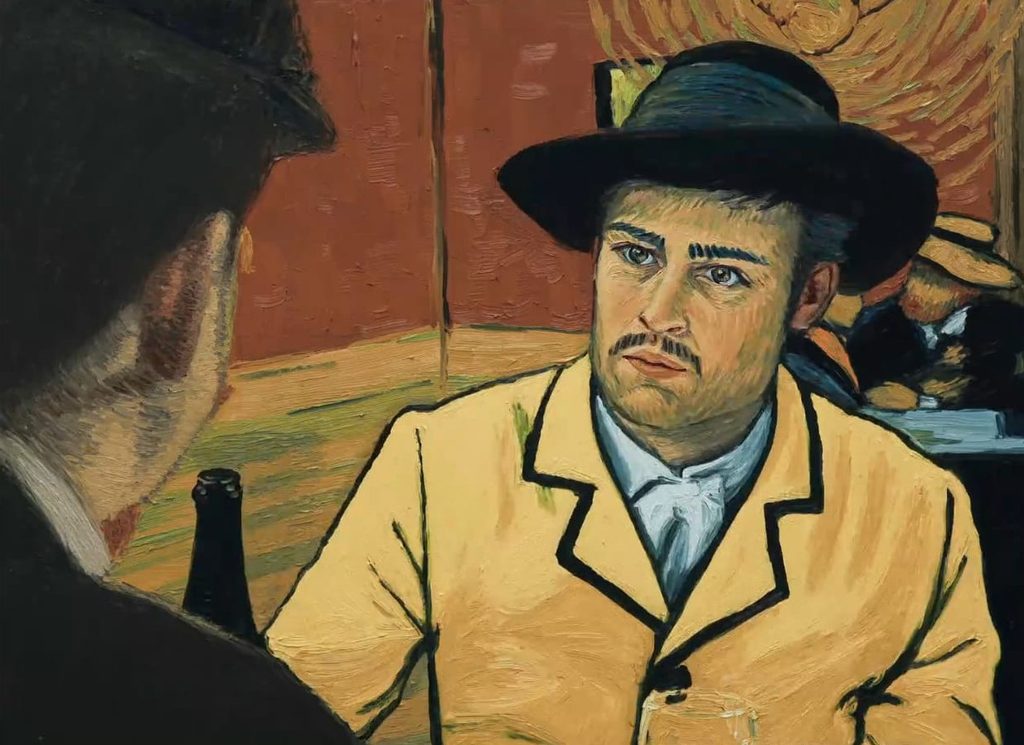
Filmin hikâyesi, Vincent van Gogh’un ölümünden yaklaşık bir yıl sonra geçmektedir. Genç Armand Roulin, babasının isteği üzerine Vincent’ın kardeşi Theo’ya ulaştırılması gereken bir mektubu teslim etmekle görevlendirilmektedir. Ancak Theo’nun da hayatını kaybettiğini öğrenince mektubu ulaştırmak için yeni bir yol aramaya başlamaktadır. Bu arayış, onu Vincent’ın son günlerini geçirdiği Auvers-sur-Oise kasabasına götürmektedir. Armand burada sanatçıyı tanıyan kişilerle görüşerek onun yaşamına ve ölümüne ilişkin farklı anlatılarla karşılaşmaktadır. Her yeni karşılaşma, Vincent’ın kişiliğine dair başka bir ayrıntıyı ortaya çıkarmaktadır. Böylece izleyici de Armand ile birlikte sanatçının ardında bıraktığı izleri takip etmektedir. Armand’ın araştırması kurmaca bir çerçeve oluştururken Vincent’ın mektupları, yaşamındaki önemli kişiler ve bilinen olaylar hikâyenin tarihsel zeminini meydana getirmektedir. Bu tercih, sanatçıyı tek bir bakış açısından değerlendirmek yerine onu tanıyan insanların hafızasından yeniden kurmaktadır.
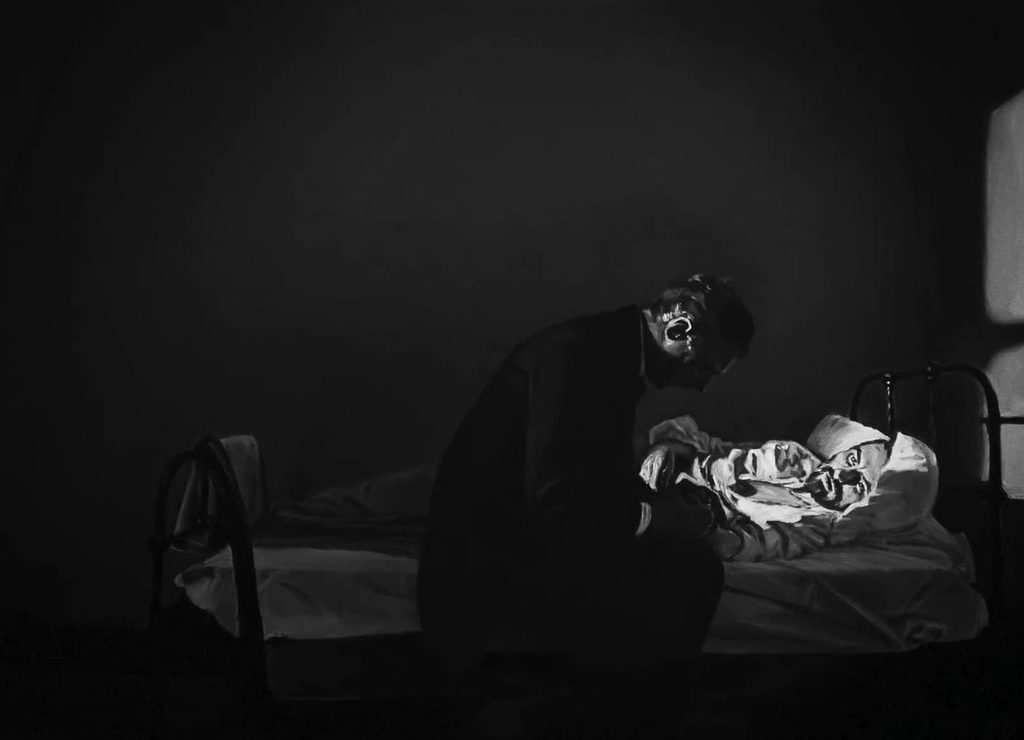
Bu hikâyenin merkezindeki sanatçının yaşamına kısaca değinmek gerekmektedir. 30 Mart 1853 tarihinde Hollanda’nın Zundert kasabasında dünyaya gelen Vincent van Gogh, resimle ilgilenmeye başlamadan önce sanat galerisi çalışanlığı, öğretmenlik ve dinî görevler gibi farklı alanlarda bulunmuştur. Yaklaşık 27 yaşında ressam olmaya karar veren sanatçı, resim yaşamını yalnızca on yıl kadar sürdürebilmiştir. Bu kısa dönemde yaklaşık 900 resim ve 1.100’den fazla kâğıt üzerine çalışma üretmiştir. Özellikle kardeşi Theo ile kurduğu yakın ilişki, sanatçının hayatında önemli bir yere sahiptir. Theo, Vincent’a hem maddi hem de manevi açıdan destek vermiş; aralarındaki mektuplaşmalar sanatçının düşüncelerini, kaygılarını ve sanata yaklaşımını anlamak açısından günümüze önemli belgeler bırakmıştır.
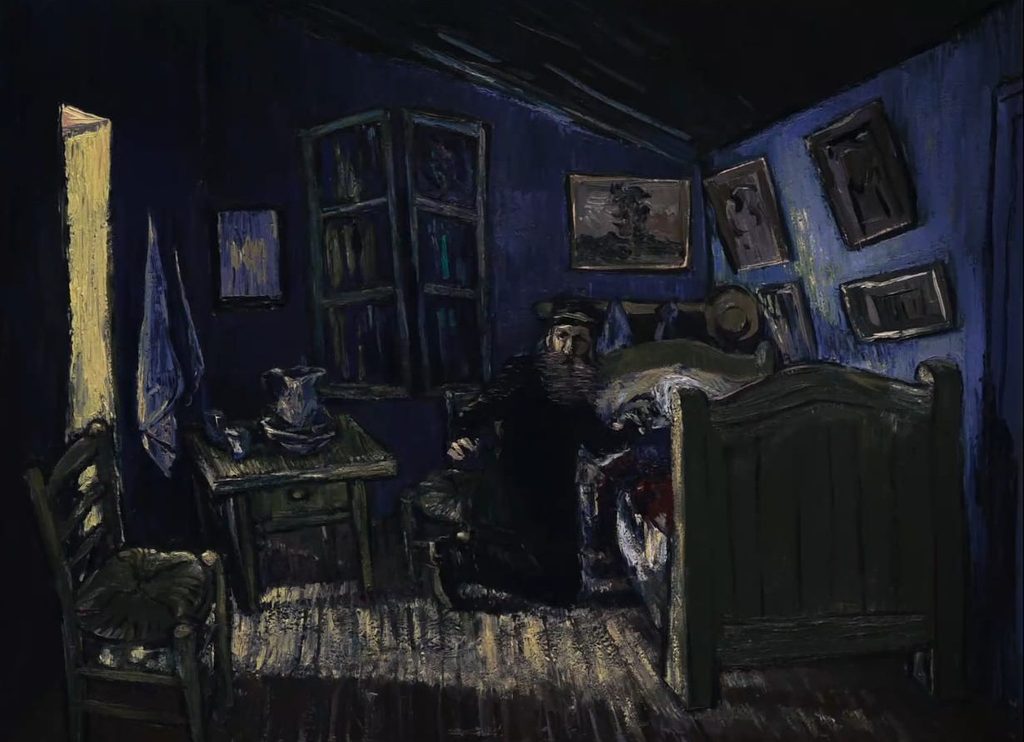
Van Gogh’un sanatındaki değişim, yaşadığı yerler ve karşılaştığı sanat çevreleriyle yakından ilişkilidir. İlk dönem resimlerinde daha koyu ve toprak tonlarının hâkim olduğu görülmektedir. 1886 yılında Paris’e taşınmasıyla birlikte Empresyonist ve Neo-Empresyonist sanatçıların çalışmalarını yakından inceleme fırsatı bulmuş, Japon baskı sanatından da etkilenmiştir. Bu süreçte paleti belirgin biçimde aydınlanmış; tamamlayıcı renkleri, güçlü karşıtlıkları ve serbest fırça darbelerini daha yoğun kullanmaya başlamıştır. Arles döneminde ortaya koyduğu Ayçiçekleri, Yatak Odası ve Gece Kahvesi Terası gibi eserleri, renk aracılığıyla duygu aktarma konusundaki yaklaşımını açıkça göstermektedir. Van Gogh’un resimlerinde renk, çoğu zaman görünen dünyayı taklit etmekten çok sanatçının o dünyayı nasıl deneyimlediğini yansıtmaktadır.
Loving Vincent’ı diğer sanat temalı filmlerden ayıran asıl özellik, Van Gogh’un resimlerini anlatının görsel malzemesi hâline getirmekle yetinmemesi; onları filmin hareket eden diline dönüştürmesidir. Yapımın ortaya çıkış süreci de en az hikâyesi kadar etkileyicidir. Film yaklaşık yedi yıllık bir üretim yolculuğunun sonucunda tamamlanmıştır. Önce oyuncularla gerçek çekimler gerçekleştirilmiş, ardından bu görüntüler ressamlar tarafından kare kare yağlı boya tablolarına dönüştürülmüştür. Yaklaşık 65 bin resim karesinin hazırlanmasında dünyanın farklı yerlerinden gelen 125 profesyonel yağlı boya ressamı görev almıştır. Çalışmalar Polonya ve Yunanistan’daki stüdyolarda yürütülmüştür. Her saniyede yaklaşık 12 ayrı resim kullanılması, hareketin sürekliliğini sağlamak için gereken emeğin boyutunu göstermektedir. Üstelik bu kareler birbirinden bağımsız biçimde üretilmemiş; hareketin akışını koruyabilmek için bir önceki görüntüyle bağlantılı olarak hazırlanmıştır.
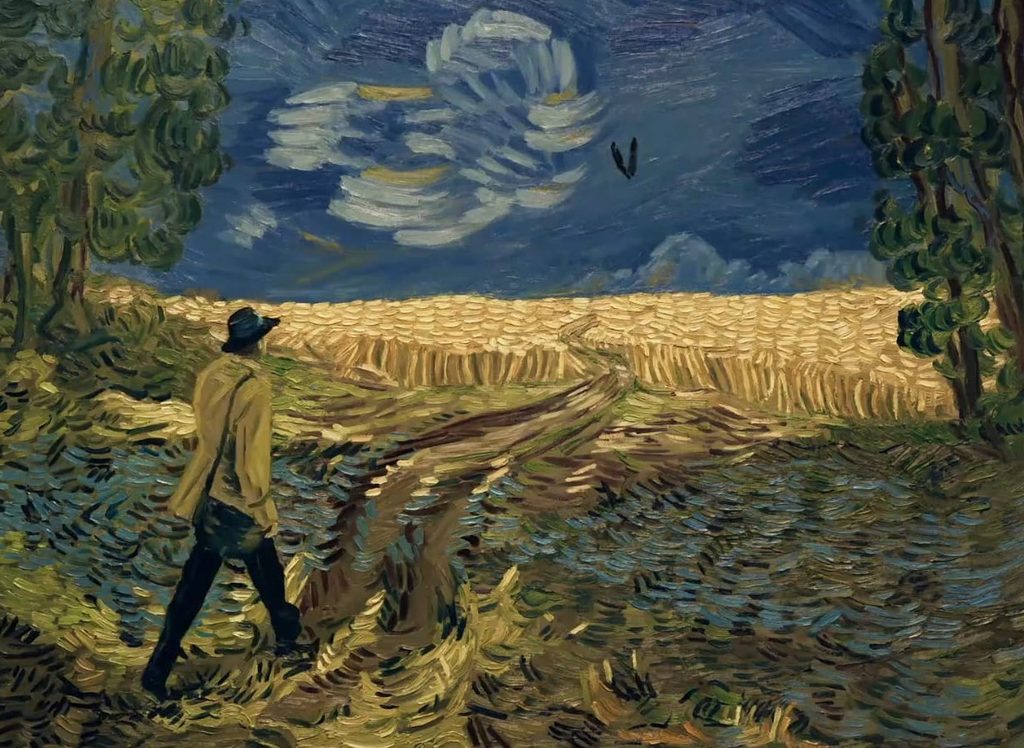
Bu üretim yöntemini öğrendikten sonra filmi izlemek, görüntülere çok daha dikkatli bakmayı gerektirmektedir. Çünkü karşımızda yalnızca Van Gogh’un üslubunu taklit eden bir animasyon bulunmamaktadır. Her sahnede yağlı boyanın dokusu, tuvalin yüzeyi ve fırça darbelerinin yönü hissedilmektedir. Karakterlerin yüzleri, saçları, kıyafetleri ve arka plandaki mimari ayrıntılar, ressamın elinden çıkmış bir tablonun parçaları gibi görünmektedir. Kamera hareket ettikçe bu resimler de dönüşmekte, renkler ve çizgiler yeni bir kompozisyon oluşturmaktadır. Bir anlamda izleyici, hareket eden tabloların arasında dolaşmaktadır.
Van Gogh’un eserlerinde sıkça karşılaştığımız eğri çizgiler, ritmik fırça darbeleri ve güçlü perspektif etkileri film boyunca korunmaktadır. Özellikle arka planların yalnızca karakterleri tamamlayan bir unsur olarak bırakılmaması dikkat çekicidir. Gökyüzü, ağaçlar, yollar ve binalar da sahnenin duygusunu belirleyen etkin elemanlara dönüşmektedir. Görüntülerdeki çizgisel hareket, izleyicinin bakışını belirli bir yöne taşırken kompozisyonun ritmini de oluşturmaktadır. Renk ve ışık kullanımı da filmin en önemli yönlerindendir. Van Gogh’un sarı, mavi, turuncu ve yeşil tonları arasındaki güçlü ilişkiler, sahnelerin atmosferini doğrudan belirlemektedir. Gündüz sahnelerinde daha aydınlık ve canlı renkler öne çıkarken gece görüntülerinde lacivert, koyu mavi ve sarının karşıtlığından yararlanılmaktadır.

Elbette filmin temposu, aksiyon ağırlıklı yapımlara alışkın izleyiciler için zaman zaman yavaş gelebilir. Hikâye, Armand’ın yaptığı görüşmeler üzerinden ilerlediğinden bazı bölümlerde anlatımın tekrara yaklaştığı hissedilebilmektedir. Ancak bu yavaşlık, görüntüleri incelemek ve her sahnedeki resimsel ayrıntıları fark etmek için de bir alan açmaktadır. Filmi yalnızca olayların nasıl sonuçlanacağını merak ederek değil, her görüntünün nasıl üretildiğine dikkat ederek izlemek deneyimi zenginleştirmektedir.
Loving Vincent, benim gözümde resim ve sinemanın bir araya geldiği etkileyici bir sanat denemesidir. Van Gogh’un yaşamını yeniden anlatırken onun eserlerine de yeni bir hareket alanı açmaktadır. Film sona erdiğinde akılda yalnızca sanatçının yaşamına ilişkin sorular kalmamakta; renklerin, çizgilerin ve fırça darbelerinin bir hikâyeyi nasıl taşıyabileceği de düşünülmektedir. Belki de filmin en değerli yanı, izleyiciyi Van Gogh’un tablolarına yeniden dönmeye teşvik etmesidir. Çünkü bu kez o resimlere baktığımızda, yalnızca gördüğümüz manzarayı değil, hareket eden bir dünyanın izlerini de hatırlamaktayız.
When Brushstrokes Come to Life: A Review of Loving Vincent
When looking at a painter’s works, I sometimes find myself feeling as though I have stepped inside the image itself. The way colors blend into one another, the direction of brushstrokes, and the effect of light on the surface can convey the story behind a painting independently of words. Released in 2017, Loving Vincent is an extraordinary film that brings this very feeling to the big screen. Directed by Dorota Kobiela and Hugh Welchman, it stands out in cinema history as the first feature-length animated film in which every frame was hand-painted in oil. Running for approximately 94 minutes, the film explores the final period of Vincent van Gogh’s life and the unanswered questions surrounding his death, drawing inspiration from the artist’s own paintings.

The story takes place approximately one year after Vincent van Gogh’s death. Young Armand Roulin is asked by his father to deliver a letter intended for Vincent’s brother, Theo. However, upon learning that Theo has also passed away, Armand begins searching for another way to deliver the letter. This search eventually takes him to the town of Auvers-sur-Oise, where Vincent spent his final days. There, Armand speaks with people who knew the artist and encounters different accounts of his life and death. Each new encounter reveals another detail about Vincent’s personality. In this way, the audience follows the traces left behind by the artist alongside Armand. While Armand’s investigation provides a fictional framework, Vincent’s letters, the important people in his life, and documented events form the historical foundation of the story. Rather than portraying the artist from a single perspective, the film reconstructs his character through the memories of those who knew him.
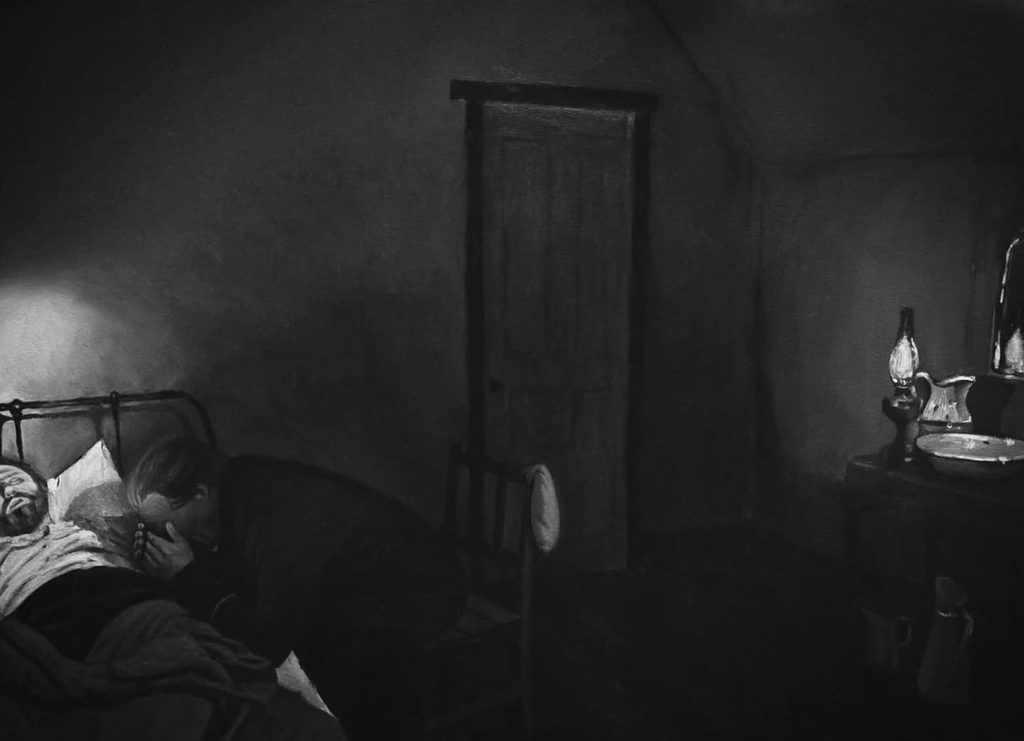
It is worth briefly exploring the life of the artist at the center of this story. Born on March 30, 1853, in the Dutch town of Zundert, Vincent van Gogh worked in several different fields before turning to painting, including employment at art galleries, teaching, and religious service. He decided to become a painter at around the age of 27 and pursued his artistic career for only about ten years. During this relatively short period, he produced approximately 900 paintings and more than 1,100 works on paper. His close relationship with his brother Theo held a particularly important place in his life. Theo supported Vincent both financially and emotionally, and their correspondence has left us with valuable documents that help us understand the artist’s thoughts, anxieties, and approach to art.
The evolution of Van Gogh’s artistic style was closely connected to the places he lived and the artistic circles he encountered. His early paintings were dominated by darker, earthy tones. After moving to Paris in 1886, he had the opportunity to closely study the works of Impressionist and Neo-Impressionist artists, while also becoming influenced by Japanese printmaking. During this period, his palette became noticeably brighter, and he began making more intensive use of complementary colors, strong contrasts, and expressive brushstrokes. Works such as Sunflowers, Bedroom in Arles, and Café Terrace at Night, created during his time in Arles, clearly demonstrate his approach to expressing emotions through color. In Van Gogh’s paintings, color often serves not merely to imitate the visible world but to reflect how the artist personally experienced it.

What truly distinguishes Loving Vincent from other films about art is that it does not simply use Van Gogh’s paintings as visual references for its narrative; it transforms them into the film’s very language of movement. The production process behind the film is almost as remarkable as its story. It was completed after approximately seven years of production. First, live-action scenes were filmed with actors, and then professional painters transformed these images into oil paintings, frame by frame. A total of 125 professional oil painters from different parts of the world contributed to the creation of approximately 65,000 painted frames. The work was carried out in studios in Poland and Greece. The use of approximately 12 individual paintings for every second of the film demonstrates the extraordinary amount of effort required to create continuous movement. Moreover, these frames were not produced independently; each one was prepared in relation to the preceding image to preserve the flow of movement.
After learning about this production technique, watching the film becomes an experience that requires much closer attention to its images. What we see is not simply an animation imitating Van Gogh’s artistic style. The texture of oil paint, the surface of the canvas, and the direction of the brushstrokes can be felt in every scene. The characters’ faces, hair, clothing, and even the architectural details in the background resemble elements of a painting created by an artist’s own hand. As the camera moves, these paintings transform as well, with colors and lines forming new compositions. In a sense, the audience finds itself wandering among moving paintings.
The curved lines, rhythmic brushstrokes, and strong perspective effects frequently found in Van Gogh’s works are preserved throughout the film. One particularly striking aspect is that the backgrounds are never treated merely as elements that complement the characters. The sky, trees, roads, and buildings also become active elements that shape the emotional atmosphere of each scene. The movement of lines guides the viewer’s gaze in particular directions while establishing the rhythm of the composition. The use of color and light is equally important. The strong relationships between Van Gogh’s shades of yellow, blue, orange, and green directly shape the atmosphere of the scenes. While brighter and more vivid colors dominate the daytime scenes, the nighttime sequences make use of the contrast between dark blue, navy, and yellow.

Of course, the film’s pacing may occasionally feel slow to viewers accustomed to action-oriented productions. Since the story progresses through Armand’s interviews, some sections may give the impression that the narrative is becoming repetitive. However, this slower pace also creates room for examining the images and noticing the painterly details in each scene. Watching the film not only to discover how the story unfolds but also to appreciate how each image was created makes the experience considerably richer.
In my view, Loving Vincent is an impressive artistic experiment that brings painting and cinema together. While retelling Van Gogh’s life, it also gives his works a new dimension of movement. When the film ends, what remains in the viewer’s mind is not only a series of questions about the artist’s life, but also a reflection on how colors, lines, and brushstrokes can carry a story. Perhaps the film’s greatest achievement is that it encourages viewers to return to Van Gogh’s paintings. Because when we look at those paintings again, we no longer remember only the scenes depicted within them, but also the traces of a world brought to life through movement.
Kaynakça
Annecy International Animation Film Festival. (2017). Loving Vincent: Official Selection 2017. https://www.annecyfestival.com/
European Film Academy. (t.y.). Loving Vincent. https://www.europeanfilmawards.eu/efa-movie/loving-vincent/
National Gallery of Art. (t.y.). Vincent van Gogh. https://www.nga.gov/artists/1349-vincent-van-gogh
National Gallery, London. (t.y.). Vincent van Gogh (1853–1890). https://www.nationalgallery.org.uk/artists/vincent-van-gogh
The Metropolitan Museum of Art. (2010). Vincent van Gogh (1853–1890). https://www.metmuseum.org/essays/vincent-van-gogh-1853-1890
Van Gogh Museum. (t.y.). Vincent van Gogh. https://www.vangoghmuseum.nl/en/art-and-stories/art/vincent-van-gogh
Welchman, H., & Kobiela, D. (Yönetmenler). (2017). Loving Vincent [Film]. BreakThru Films; Trademark Films.
Fotoğraflar
IMDb. (t.y.). Loving Vincent (2017): Media index. https://www.imdb.com/title/tt3262342/mediaindex/
HDFilmCehennemi. (t.y.). Loving Vincent. https://www.hdfilmcehennemi.nl/loving-vincent/
Share this content:

Yorum gönder