



Bedri Rahmi Eyüboğlu – Kağnı Mozaiği
Bedri Rahmi Eyüboğlu’nun 1965 yılında gerçekleştirdiği Kağnı adlı mozaik pano, sanatçının Anadolu kültüründen beslenen sanat anlayışını yansıtan önemli çalışmalarından biridir. İstanbul Karaköy’de bulunan Aksu İş Hanı’nın zemin katındaki iç mekânda yer alan eser, sanatçının mimari yapılarla bütünleşen kamusal sanat uygulamalarına örnek oluşturur.
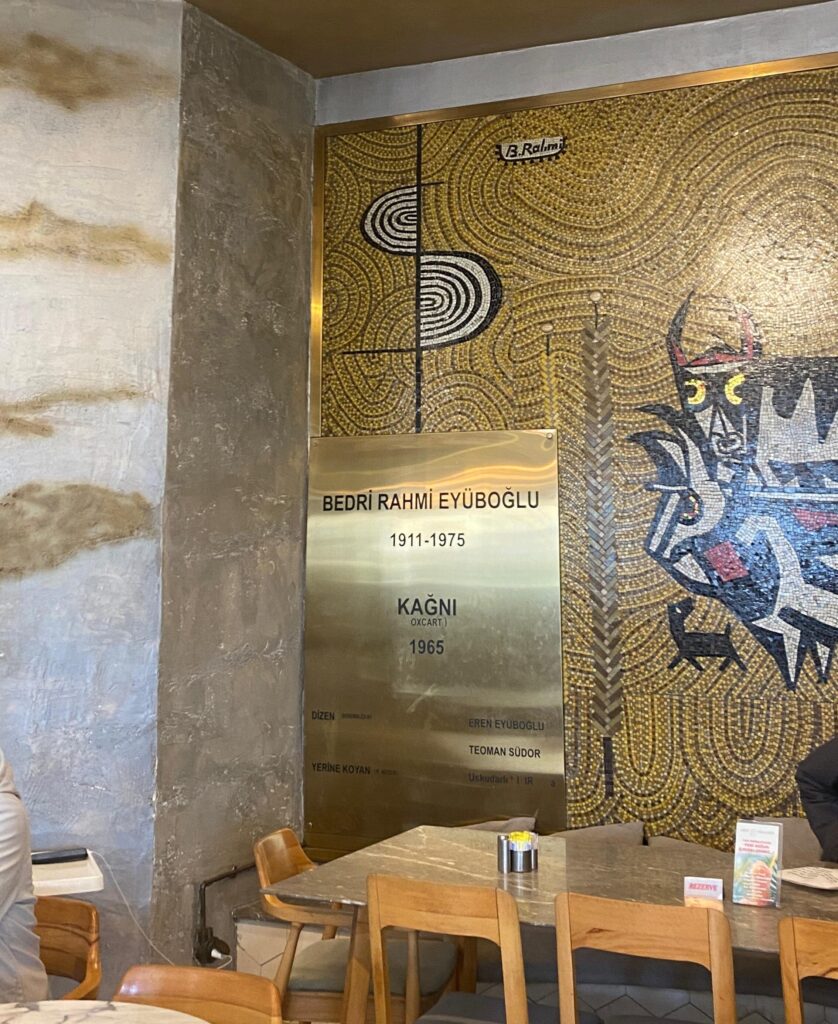
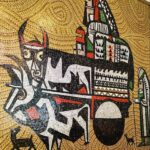
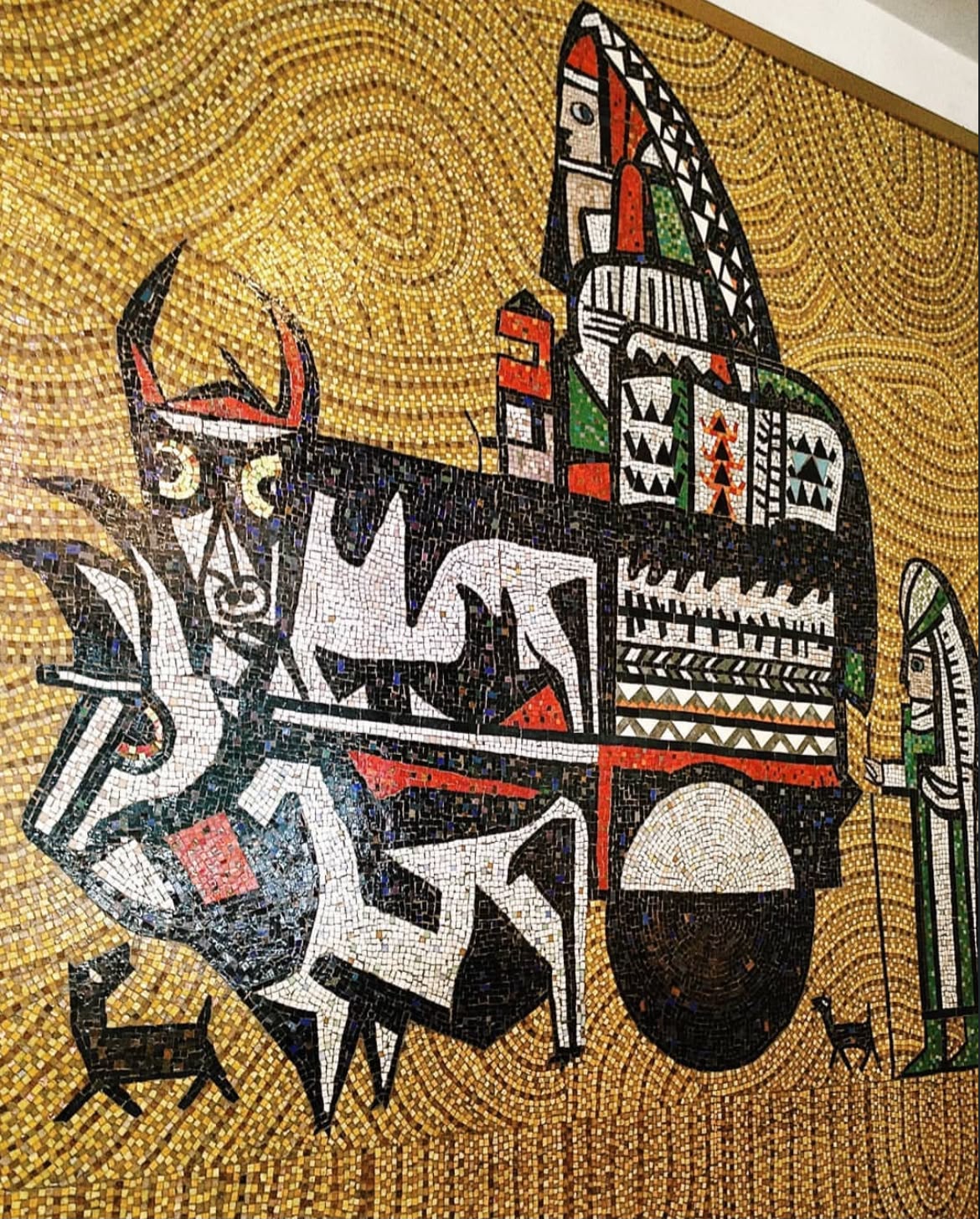
Mozaik panoda, sarı başaklarla çevrelenmiş bir kompozisyon içerisinde öküzlerin çektiği bir kağnı ve Anadolu’nun geleneksel yaşamına ait figürler görülür. Kadın, çocuk ve hayvan figürleriyle oluşturulan sahne, kırsal yaşamın gündelik unsurlarını bir araya getirir. Renkli cam mozaik parçalarıyla oluşturulan yüzeyde özellikle sarı tonları dikkat çeker. Arka planda kullanılan dalgalı altın zemin anlayışı ise Bizans mozaik sanatının etkilerini hatırlatır. Sanatçı, bu geleneksel yaklaşımı kendi figüratif ve geometrik anlatımıyla yeniden yorumlar.
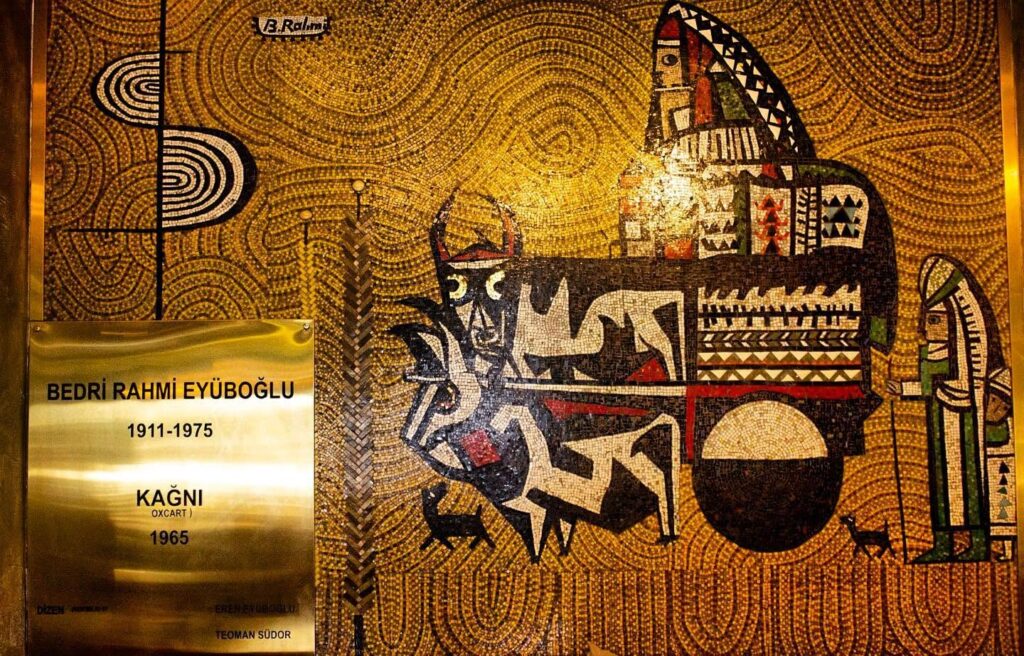
Eserde yer alan kağnı, Anadolu’nun tarıma dayalı yaşamında önemli bir yere sahip olan geleneksel bir ulaşım ve taşıma aracıdır. Öküzler, başaklar ve insan figürleriyle birlikte düşünüldüğünde üretimi, emeği ve kırsal yaşamı temsil eder. Bedri Rahmi Eyüboğlu, gündelik yaşamdan aldığı bu unsurları mozaik tekniğiyle kalıcı bir sanat eserine dönüştürür. Böylece Anadolu kültürünü yalnızca bir konu olarak ele almakla kalmaz, halk kültürüne ait biçimleri ve imgeleri kendi sanat dili içerisinde yeniden yorumlar.
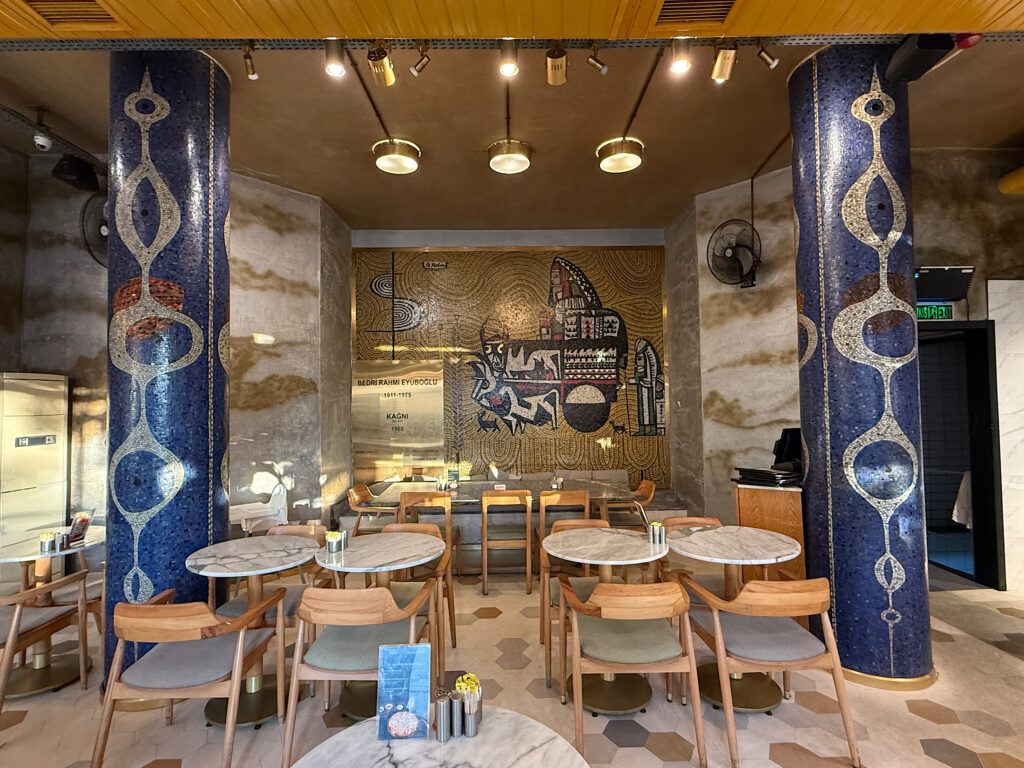
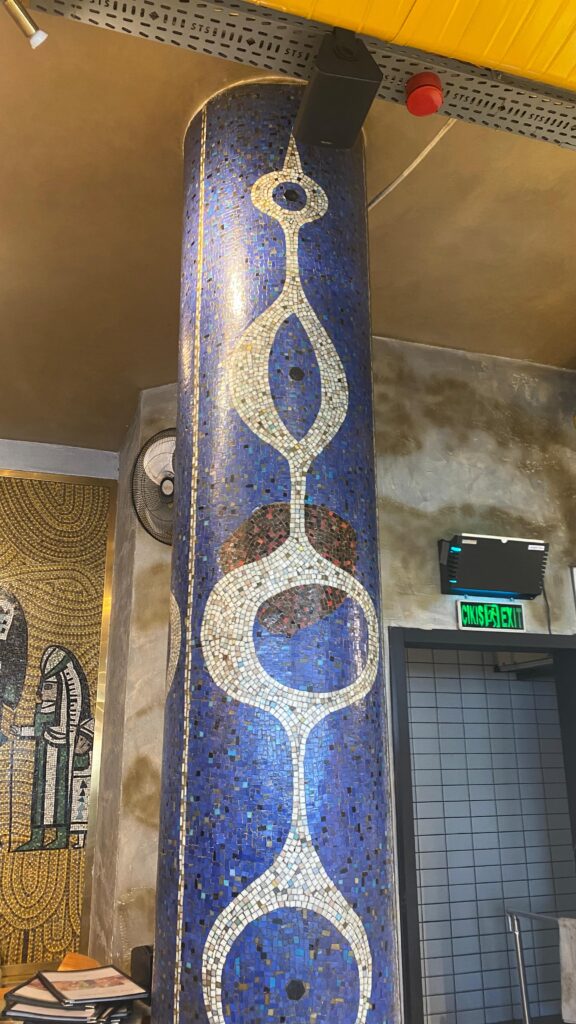
Sanatçının çalışmalarında Anadolu motifleri, halk sanatı, geleneksel süsleme biçimleri ve yerel kültür önemli bir yer tutar. Resimlerinde kullandığı renkli ve yalın anlatımı mozaik, duvar resmi ve rölyef gibi farklı tekniklere de taşımıştır. Kağnı mozaiği bu yaklaşımın dikkat çekici örneklerinden biridir. Sanatçının aynı yapıdaki dış cephede bulunan Tatlıcılar Rölyefi adlı çalışması da farklı tekniklerle mimari yüzeylerde sanat üretme anlayışını göstermektedir.
Kağnı mozaiği, Anadolu’nun geleneksel yaşamını, üretim kültürünü ve insan emeğini sanat aracılığıyla görünür kılan bir çalışmadır. Aynı zamanda Bedri Rahmi Eyüboğlu’nun geleneksel kültürle modern sanat arasında kurduğu ilişkinin önemli örneklerinden biri olarak değerlendirilebilir. Günümüzde Karaköy’de bir iş hanının iç mekânında bulunan eser, sanatın yalnızca müzelerde ve galerilerde değil, günlük yaşamın içerisinde de var olabileceğini göstermektedir.
Konum 📍Murat Muhallebicisi, Karamustafapaşa Mah., Halilpaşa Sok. Aksu İşhani 14/C, 34440 Beyoglu/Beyoğlu/İstanbul https://maps.app.goo.gl/sGNUY4YgJdqhJ6Fb7
kaynakçalar
Bedri Rahmi Eyüboğlu – The Cart Mosaic
The mosaic panel titled Kağnı (Ox Cart), created by Bedri Rahmi Eyüboğlu in 1965, is one of theimportantworks reflecting the artist’s artistic approach inspired by Anatolian culture. Located inthe interiorspace on the ground floor of Aksu İş Hanı in Karaköy, Istanbul, the work serves as anexample ofthe artist’s public art practices integrated with architectural structures.
The mosaic panel depicts an ox cart pulled by oxen within a composition surrounded by yellowearsof wheat, along with figures belonging to traditional Anatolian life. The scene, composed offiguresof women, children, and animals, brings together everyday elements of rural life. Yellowtones areparticularly striking on the surface, which is created using colorful glass mosaic pieces.The undulatinggolden background also recalls the influences of Byzantine mosaic art. The artistreinterprets thistraditional approach through his own figurative and geometric visual language.
The ox cart depicted in the work is a traditional means of transportation and carrying that heldanimportant place in Anatolia’s agriculture-based way of life. When considered together with theoxen,ears of wheat, and human figures, it represents production, labor, and rural life. Bedri RahmiEyüboğlutransforms these elements drawn from everyday life into a lasting work of art throughthe mosaictechnique. In this way, he not only addresses Anatolian culture as a subject but alsoreinterpretsforms and images belonging to folk culture within his own artistic language.
Anatolian motifs, folk art, traditional decorative forms, and local culture occupy an important placein theartist’s works. He also carried the colorful and simple visual expression used in his paintingsinto differenttechniques such as mosaics, murals, and reliefs. The Kağnı mosaic is one of the notableexamples of thisapproach. The artist’s work titled Tatlıcılar Relief, located on the exterior façadeof the same building,also demonstrates his approach to producing art on architectural surfacesthrough different techniques.
The Kağnı mosaic is a work that makes Anatolia’s traditional way of life, production culture, andhumanlabor visible through art. It can also be regarded as one of the important examples of therelationshipBedri Rahmi Eyüboğlu established between traditional culture and modern art. Today,located inthe interior of a business building in Karaköy, the work demonstrates that art can existnot only inmuseums and galleries but also within everyday life.
Bedri Rahmi Eyüboğlu – The Cart Mosaic
The mosaic panel titled Kağnı (Ox Cart), created by Bedri Rahmi Eyüboğlu in 1965, is one of theimportantworks reflecting the artist’s artistic approach inspired by Anatolian culture. Located inthe interiorspace on the ground floor of Aksu İş Hanı in Karaköy, Istanbul, the work serves as anexample of theartist’s public art practices integrated with architectural structures.
The mosaic panel depicts an ox cart pulled by oxen within a composition surrounded by yellowearsof wheat, along with figures belonging to traditional Anatolian life. The scene, composed offiguresof women, children, and animals, brings together everyday elements of rural life. Yellowtones areparticularly striking on the surface, which is created using colorful glass mosaic pieces.The undulatinggolden background also recalls the influences of Byzantine mosaic art. The artistreinterprets thistraditional approach through his own figurative and geometric visual language.
The ox cart depicted in the work is a traditional means of transportation and carrying that heldanimportant place in Anatolia’s agriculture-based way of life. When considered together with theoxen,ears of wheat, and human figures, it represents production, labor, and rural life. Bedri RahmiEyüboğlutransforms these elements drawn from everyday life into a lasting work of art throughthe mosaictechnique. In this way, he not only addresses Anatolian culture as a subject but alsoreinterprets formsand images belonging to folk culture within his own artistic language.
Anatolian motifs, folk art, traditional decorative forms, and local culture occupy an important placein theartist’s works. He also carried the colorful and simple visual expression used in his paintingsinto differenttechniques such as mosaics, murals, and reliefs. The Kağnı mosaic is one of the notableexamples of thisapproach. The artist’s work titled Tatlıcılar Relief, located on the exterior façade ofthe same building,also demonstrates his approach to producing art on architectural surfaces throughdifferent techniques.
The Kağnı mosaic is a work that makes Anatolia’s traditional way of life, production culture, andhumanlabor visible through art. It can also be regarded as one of the important examples of therelationshipBedri Rahmi Eyüboğlu established between traditional culture and modern art. Today,located in theinterior of a business building in Karaköy, the work demonstrates that art can existnot only in museumsand galleries but also within everyday life.
Share this content:

Yorum gönder