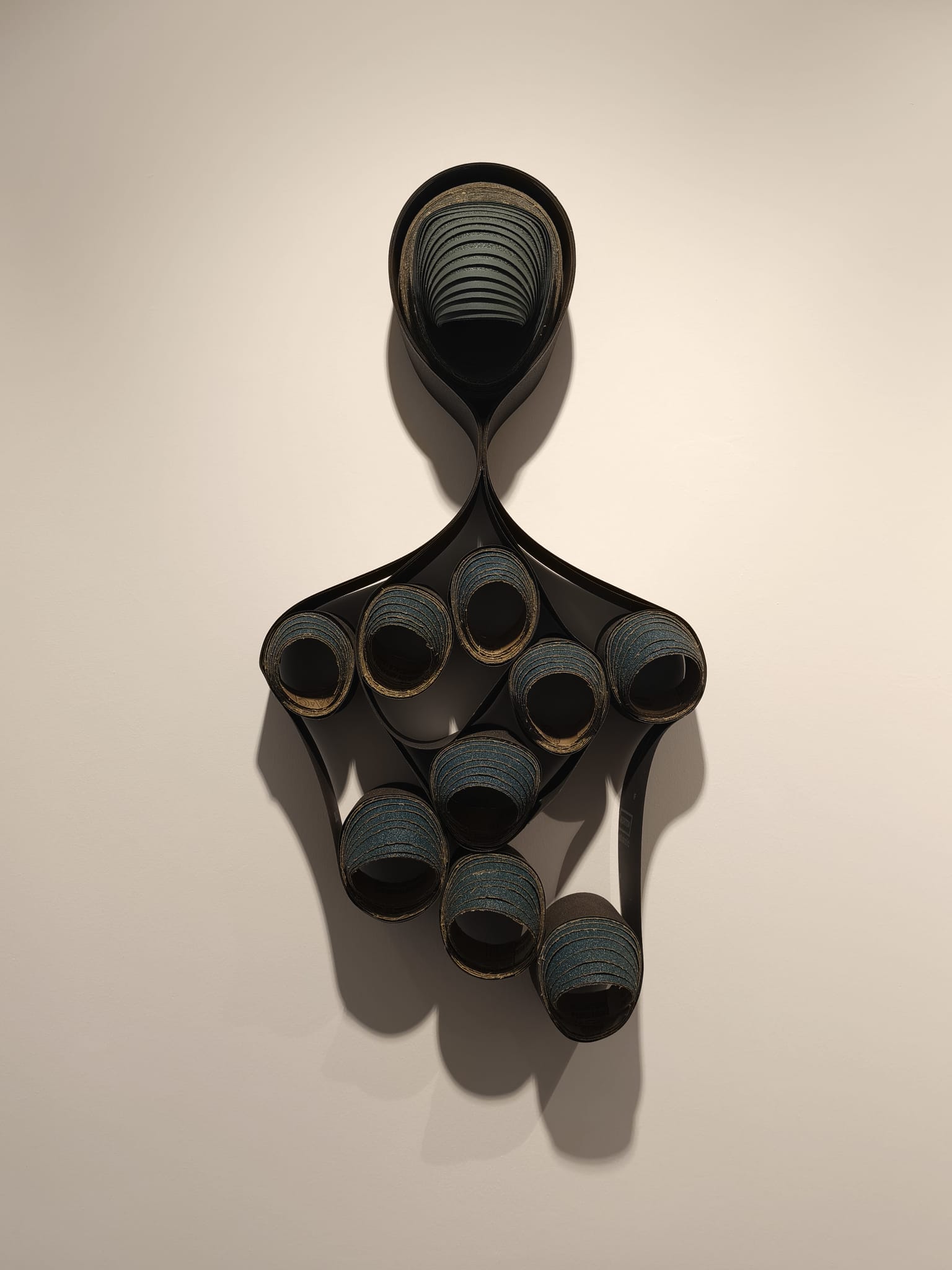
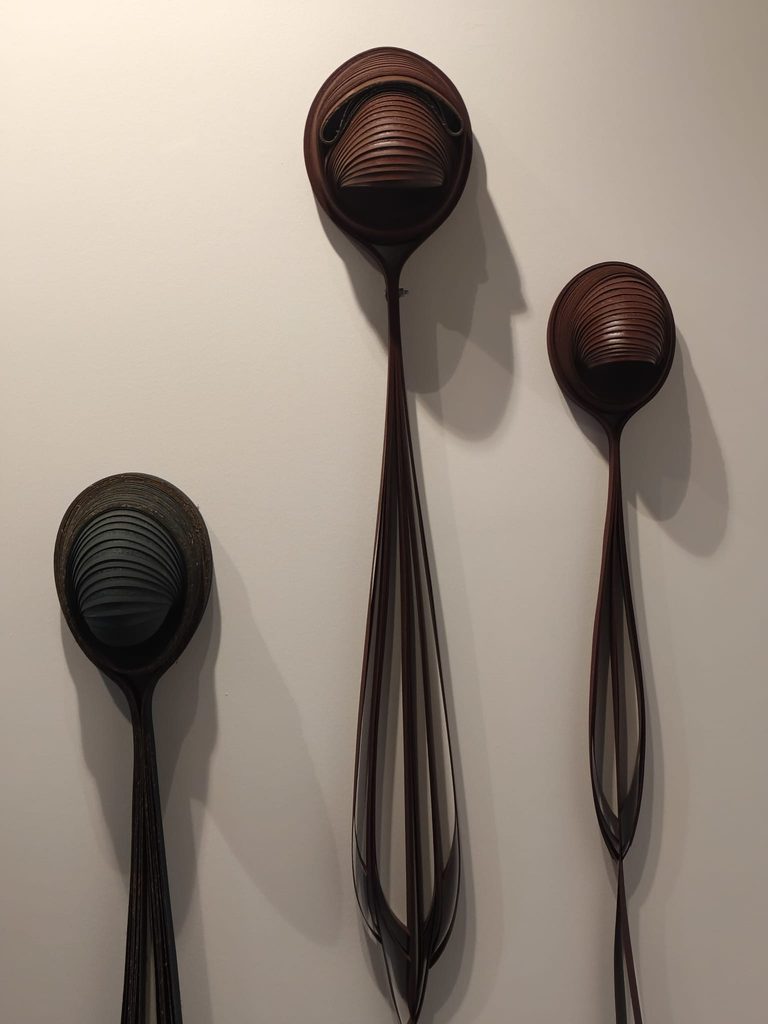
Bazı sergilerde eserleri anlamaya çalışırken kendimi, sanatçının ne anlatmak istediğinden çok, eserlerin bende ne uyandırdığına odaklanırken buluyorum. Y. Bahadır Yıldız’ın EArt Galeri’deki Başlangıç Noktası: Boşluk sergisi de benim için böyle bir deneyimdi. İlk bakışta insanı, hayvanı ya da organik bir oluşumu çağrıştıran heykeller, yaklaştıkça tanıdık biçimlerden uzaklaşıyor. Kıvrılan, uzayan ve kendi üzerine katlanan formlar, sanki tamamlanmış bir beden olmaktan çok, oluşmaya devam eden canlı yapılar gibi görünüyor.
1976 yılında Eskişehir’de doğan Y. Bahadır Yıldız, Ege Üniversitesi Matbaacılık ve Bakü Devlet Üniversitesi Siyasal Bilimler eğitimlerinin ardından 2003 yılında Akdeniz Üniversitesi Heykel Bölümü’nden mezun olmuş. Sanatçının üretiminde doğal ve endüstriyel malzemelerle kurduğu ilişki önemli bir yer tutuyor. Küratörlüğünü Dilara Güven’in üstlendiği bu sergide de heykellerin yanı sıra kök boya resimler ve sanatçının ilk kez kullandığı PVC ile ürettiği çalışmalar yer alıyor. Ancak benim en çok ilgimi çeken, malzemelerin yalnızca birer araç olarak kullanılmaması; aksine eserin anlamını doğrudan şekillendirmeleri oldu.
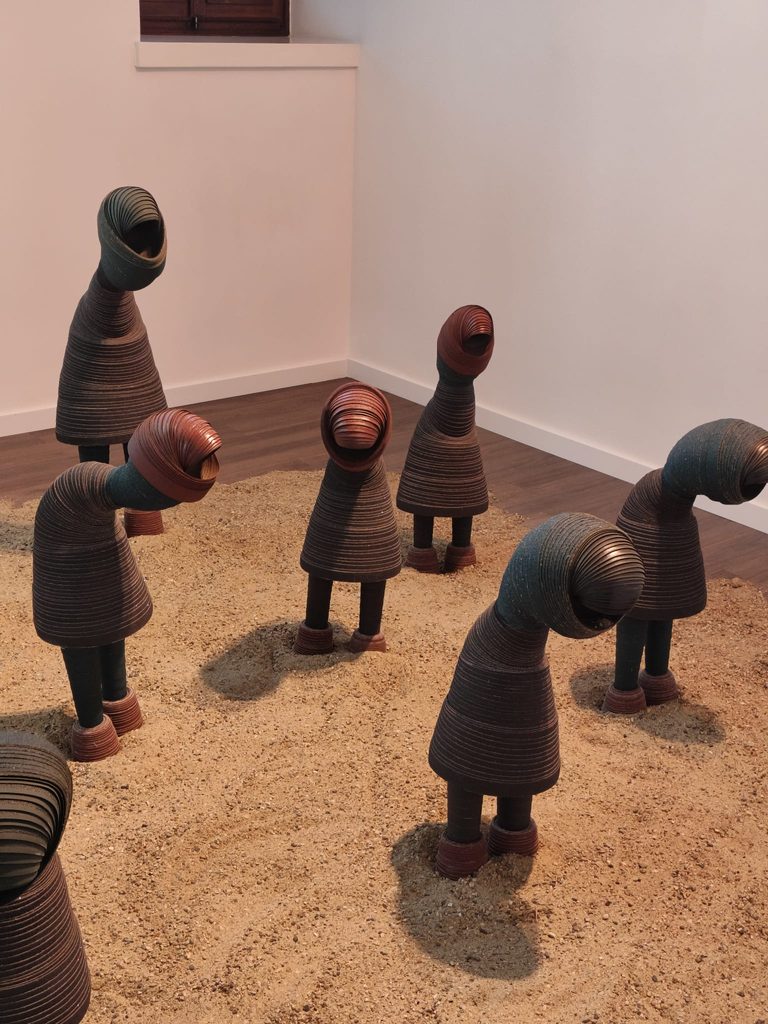
Özellikle zımpara kâğıdından oluşturulan heykellerdeki katmanlı ve pürüzlü yüzeyler, biçimlere hem koruyucu hem de rahatsız edici bir karakter kazandırıyor. Zımpara, doğası gereği aşındıran bir malzeme. Buna rağmen Yıldız’ın heykellerinde üst üste sarılarak büyüyen bir kabuğa dönüşüyor. Burada bana ilginç gelen, korunma ihtiyacının aynı zamanda bir temas meselesine dönüşmesi: Kendimizi dış dünyadan korumak için oluşturduğumuz sınırlar, bazen dışarıyla ilişki kurmamızı da zorlaştırabiliyor.
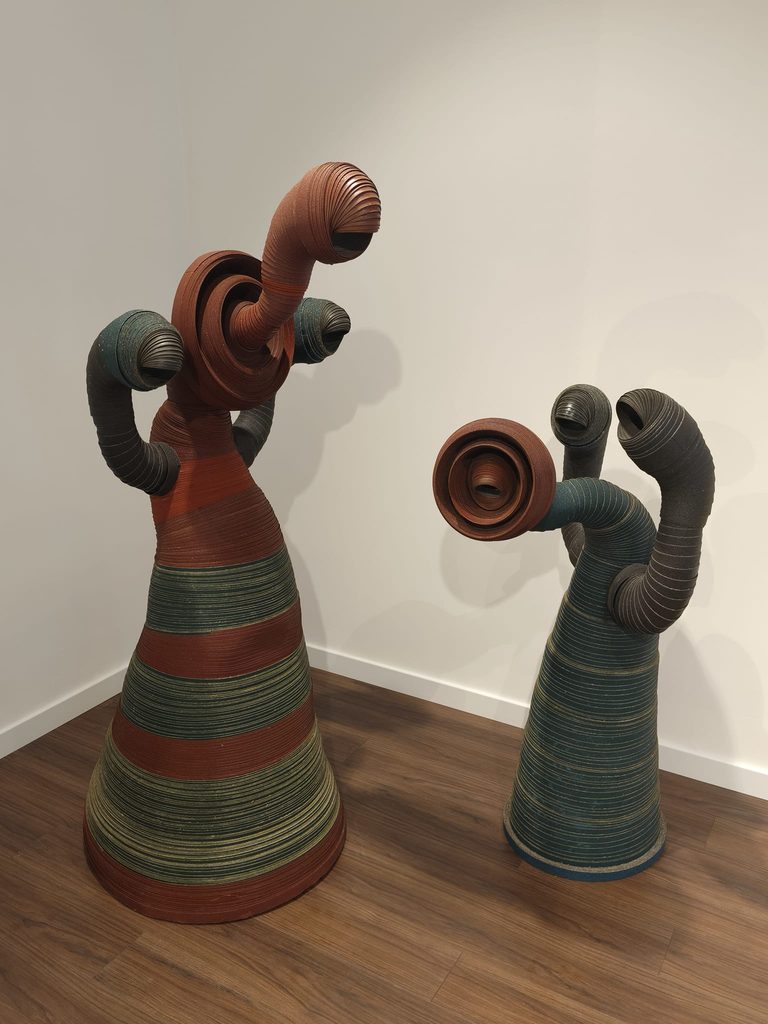
“Bir kabuk gibi koruyan, ama aynı zamanda sürtünme ve rahatsızlık yaratan bir yüzey…”
Serginin düşünsel dünyasını benim için özetleyen bu karşıtlık, PVC kullanılan eserlerde daha da görünür hâle geliyor. Zımparanın sert, aşındırıcı ve katmanlı dokusunun karşısında PVC’nin esnekliği ve kayganlığı yer alıyor. İki malzeme arasındaki bu tezatlık, heykellerin biçimlerinde de hissediliyor. Bir yanda kendini kapatan, sınır oluşturan yapılar; diğer yanda kıvrılarak uzayan ve yön değiştiren formlar var. Bu karşıtlık bana bedenin hem korunmaya hem de hareket etmeye duyduğu ihtiyacı düşündürdü.
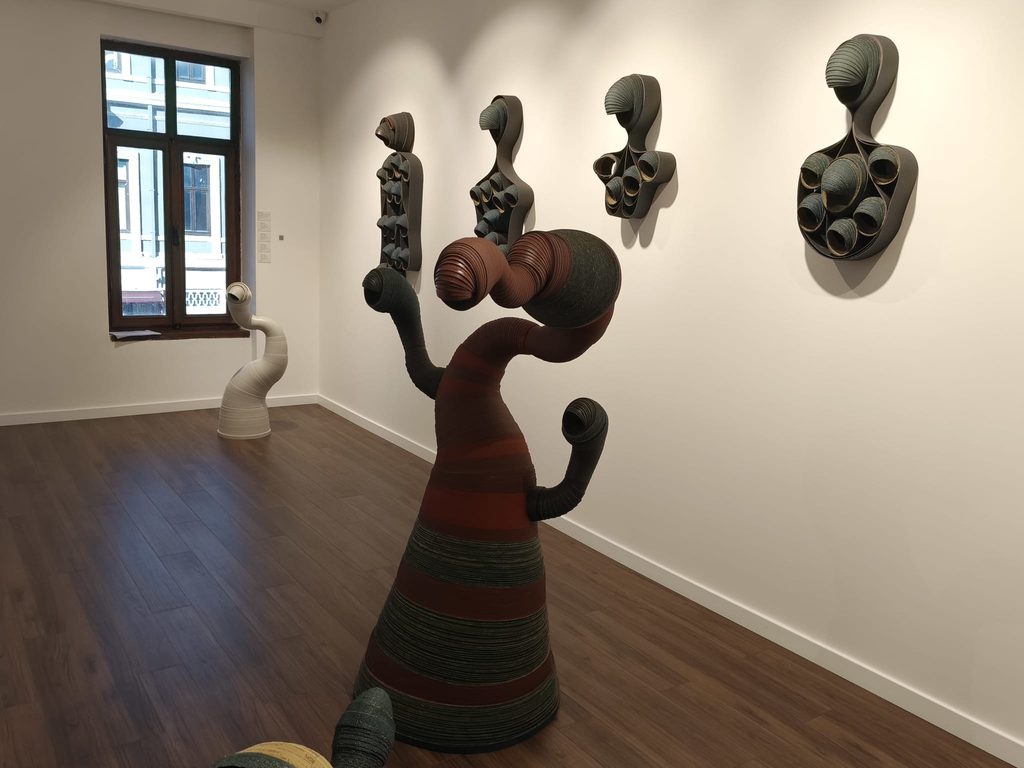
Serginin adındaki boşluk ise yalnızca heykellerin içindeki açıklıklardan ibaret değil. Sanatçının yaklaşımında boşluk, biçimin çevresinde oluştuğu ve ona yön verdiği bir başlangıç noktası. Heykellerin ağız benzeri açıklıkları, iç içe geçen katmanları ve mekâna doğru uzanan parçaları, onları tek bir anatomiyle tanımlamayı zorlaştırıyor. Bazen bir organı, bazen bir kabuğu, bazen de henüz adlandıramadığım bir canlıyı çağrıştırıyorlar. Bu belirsizlik, eserleri anlamlandırmak yerine onlarla ilişki kurmamı sağladı.
Başlangıç Noktası: Boşluk sergisinden ayrılırken aklımda kalan, biçimlerin neye benzediğinden çok, nasıl oluştuğu ve kendilerini nasıl koruduğu sorusuydu. Yıldız’ın heykelleri bana sınırların her zaman sabit olmadığını; bazen kıvrılarak, bazen aşınarak, bazen de yeni bir yüzey oluşturarak değişebildiğini hatırlattı. Sanırım sergiyi benim için ilgi çekici kılan da tam olarak buydu: Boşluğun bir eksiklik değil, yeni bir oluşumun başlangıcı olabileceğini göstermek.
Point of Departure: Emptiness — Y. Bahadır Yıldız | EArt Gallery
When trying to understand artworks in an exhibition, I sometimes find myself focusing less on what the artist intends to communicate and more on what the works evoke within me. Y. Bahadır Yıldız’s exhibition Point of Departure: Emptiness at EArt Gallery was one such experience for me. At first glance, the sculptures evoke images of humans, animals, or organic formations. However, as you approach them, they gradually move away from familiar shapes. Their twisting, stretching, and folding forms seem less like completed bodies and more like living structures that are still in the process of taking shape.
Born in Eskişehir in 1976, Y. Bahadır Yıldız studied Printing at Ege University and Political Science at Baku State University before graduating from Akdeniz University’s Department of Sculpture in 2003. His relationship with both natural and industrial materials plays an important role in his artistic practice. Curated by Dilara Güven, this exhibition features not only sculptures but also natural-dye paintings and works made using PVC, a material the artist has incorporated into his practice for the first time. What interested me most, however, was the fact that the materials were not simply used as tools; instead, they directly shaped the meaning of the artworks.
The layered and rough surfaces of the sculptures made from sandpaper, in particular, give the forms both a protective and an unsettling character. By nature, sandpaper is an abrasive material. Yet in Yıldız’s sculptures, it is wrapped around itself, gradually transforming into a growing shell. What I found particularly interesting here was how the need for protection also becomes a question of contact: the boundaries we create to protect ourselves from the outside world can sometimes make it more difficult for us to connect with it.
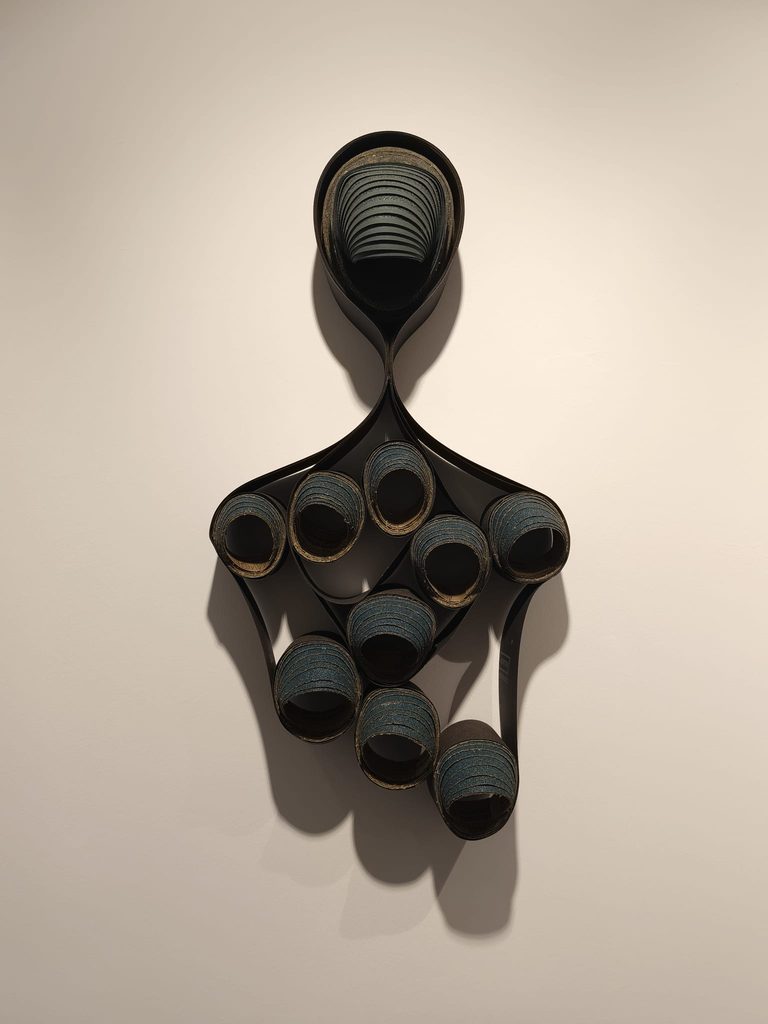
“A surface that protects like a shell, yet simultaneously creates friction and discomfort…”
This contrast, which I believe summarizes the intellectual framework of the exhibition, becomes even more apparent in the works made with PVC. Opposing the hard, abrasive, and layered texture of sandpaper is the flexibility and smoothness of PVC. This contrast between the two materials can also be felt in the forms of the sculptures. On one side are structures that close themselves off and create boundaries; on the other are forms that twist, extend, and change direction. This contrast made me think about the body’s need for both protection and movement.
The emptiness in the exhibition’s title is not limited to the openings within the sculptures. In the artist’s approach, emptiness serves as a starting point around which form develops and through which it finds direction. The mouth-like openings, overlapping layers, and extensions reaching into the surrounding space make it difficult to define these sculptures through a single anatomy. At times, they remind me of an organ, sometimes a shell, and sometimes a living creature that I cannot yet name. This ambiguity encouraged me to establish a connection with the artworks rather than simply trying to interpret them.
As I left the Point of Departure: Emptiness exhibition, what remained in my mind was not so much what the forms resembled, but rather how they came into being and how they protected themselves. Yıldız’s sculptures reminded me that boundaries are not always fixed; they can change by twisting, wearing away, or forming entirely new surfaces. I believe this is precisely what made the exhibition so compelling to me: its ability to demonstrate that emptiness does not necessarily represent an absence, but can instead become the starting point of a new formation.
- Yer: Eart Galeri
- Adres: Vişnezade Mahallesi, Süleyman Seba Caddesi No:47, Akaretler, Beşiktaş
- Tarih: 22 Eylül – 18 Ekim 2026
- Ziyaret Saatleri: Pazartesi-Cumartesi 10.30-18.30. Pazar günü kapalı
- Instagram: eartgaleri
- Location: Eart Gallery
- Address: Vişnezade Neighborhood, Süleyman Seba Street No: 47, Akaretler, Beşiktaş
- Date: September 22 – October 18, 2026
- Visiting Hours: Monday–Saturday, 10:30–18:30. Closed on Sundays.
- Instagram: eartgaleri
Share this content:


Yorum gönder